
What To Expect From A Commercial Heating System Review
In most commercial buildings, the heating system only gets proper attention when something stops working. A boiler locks out, certain areas never reach temperature, or energy costs start to rise without an obvious reason. At that point, the focus is on fixing the issue quickly and getting things back up and running.
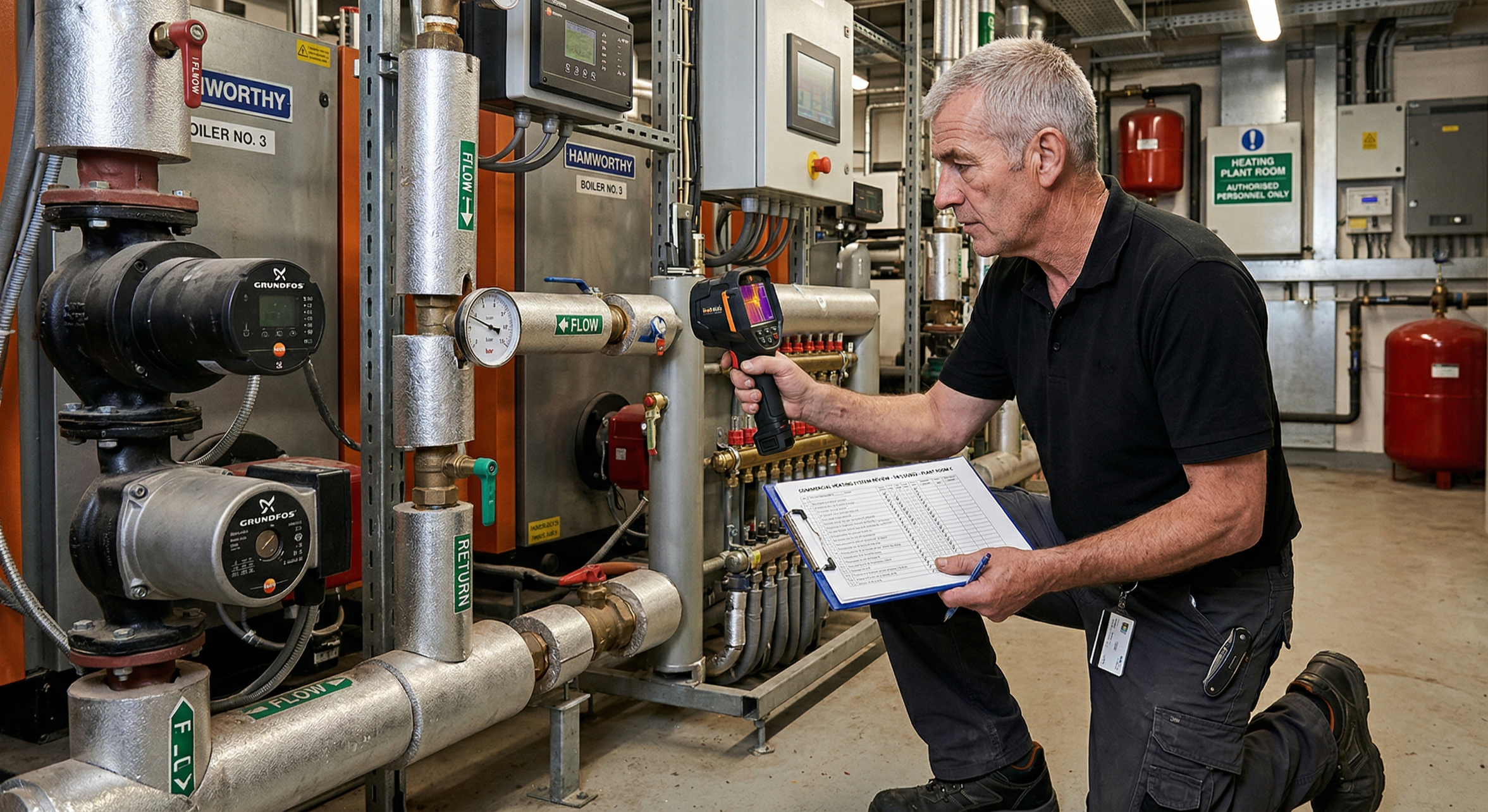
A commercial heating system review is a different process entirely. It is not about reacting to a single fault. It is about understanding how the system is performing as a whole, how it is being used, and where it no longer aligns with the demands placed on it.
For many businesses, the value comes from the clarity it provides. Instead of guessing or reacting, you get a structured view of what is actually happening within your system.
Starting With How The Building Operates
A proper review begins with the building, not the equipment.
Heating systems are designed around assumptions. Occupancy levels, operating hours, internal layouts and usage patterns all influence how a system is sized and configured. The issue is that these assumptions rarely hold true over time.
An office that was once half occupied may now be full throughout the week. A warehouse may have introduced temperature-sensitive processes. A hospitality venue may be running longer hours than it did originally. Each of these changes alters the heating demand.
Without understanding how the building currently operates, it is impossible to judge whether the system is performing well or simply coping.
Looking At Heat Generation In Context
The boiler is still a critical part of the system, but a review looks at how it is operating rather than just whether it works.
This includes checking whether the boiler is correctly sized for current demand and how it is cycling. Frequent short cycling, where the boiler turns on and off repeatedly, is a common issue and usually indicates either oversizing or poor system control. Over time, this increases wear and reduces efficiency.
Flow and return temperatures are also important. In a well-performing system, there should be a consistent temperature difference between the flow and return, often around 20°C in traditional commercial systems, although this can vary depending on design. If that gap is too small, it suggests poor heat transfer or excessive flow rates. If it is too large, it may indicate restricted circulation.
These are not faults in themselves, but they provide insight into how effectively the system is operating.
Understanding Circulation and Hydraulic Performance
One of the most overlooked areas in commercial heating is circulation. The system relies on pumps to move heated water around the building, and even small issues here can have a significant impact.
During a review, pump performance is considered in relation to the building. Are pumps delivering sufficient flow to all areas? Are there signs of cavitation or noise that suggest strain? Has the system been extended over time without adjusting pump capacity?
Pipework condition also plays a role. Over time, internal corrosion and debris can reduce internal diameter and restrict flow. This is particularly common in older systems that have not been chemically treated or flushed.
In practical terms, this is why some areas heat quickly while others lag behind. The heat is there, but it is not being delivered effectively.
System Balance and Distribution
Balancing is fundamental to consistent heating, yet it is rarely revisited once a system is installed.
Each branch of the system should receive the correct proportion of flow. If one area receives too much, it heats quickly and can cause the system to shut down before other areas reach temperature. If another area receives too little, it will always struggle.
Over time, balancing is affected by small changes. Valves are adjusted, components are replaced, or extensions are added. These changes are often made without rebalancing the system as a whole.
A review identifies where flow is not being distributed correctly. In many cases, rebalancing alone can resolve long-standing comfort issues.
Controls and System Behaviour
Controls are often where performance is won or lost.
In many commercial buildings, controls have evolved rather than being designed with a clear strategy. Thermostats may be located in areas that are not representative of the wider building. Time schedules may have been adjusted repeatedly without coordination. Zones may no longer reflect how spaces are actually used.
A common example is a thermostat located in a warm corridor or near a heat source. The system shuts down when that area reaches temperature, even though other parts of the building remain cold.
Modern systems may include weather compensation or load compensation, but these features are not always set up correctly or used effectively.
A review looks at how the system responds to real conditions, not just how it is programmed.
Water Quality and System Condition
Water quality is a factor that is often missed until it causes a problem.
Over time, heating systems can accumulate sludge, magnetite and scale. These reduce heat transfer, restrict flow and increase wear on components such as pumps and heat exchangers. In extreme cases, they can lead to blockages or damage.
A review may include checking for signs of poor water quality, such as cold spots in radiators, discoloured water, or noise within the system. It may also involve testing inhibitor levels or recommending treatment where needed.
This is one of the areas where preventative action can significantly extend system life.
Identifying Patterns Rather Than Isolated Faults
Perhaps the most valuable part of a heating system review is the ability to identify patterns.
Recurring pressure drops, repeated faults, or ongoing comfort complaints are rarely isolated issues. They usually point to underlying problems that have not been fully addressed.
By looking at these patterns in context, it becomes possible to move beyond temporary fixes and deal with root causes. That is what reduces repeat call-outs and improves long-term reliability.
What You Gain From A Proper Review
A commercial heating system review should not leave you with a long list of technical observations that are difficult to interpret.
Instead, you should come away with a clear understanding of how your system is performing, where it is under strain, and what can be done to improve it. In many cases, improvements are incremental rather than disruptive. Adjustments to controls, system balancing, targeted maintenance or minor upgrades can have a significant impact.
Most importantly, it allows you to make decisions based on evidence rather than assumptions.
A More Informed Way To Manage Your System
Heating systems are a core part of how commercial buildings operate, yet they are often managed reactively. A structured review provides a different approach. It replaces guesswork with insight and short-term fixes with longer-term planning.
At North Oxfordshire Heating, we carry out detailed heating system reviews for commercial clients across Banbury, Oxfordshire and the surrounding areas. Our focus is on understanding how your system works in practice and helping you get the best performance from it.
To arrange a review or discuss your system, call 01295 231057 or email contact@northoxfordshireheating.co.uk.
